What to Look for in a Quality Reading Tutor (And Why It Matters)
Finding the right reading tutor is about more than just finding someone to help with homework; it is about building a foundation for lifelong literacy. Based on the qualities of effective tutoring, here is a concise summary of what to look for and why it matters:
What to Look For
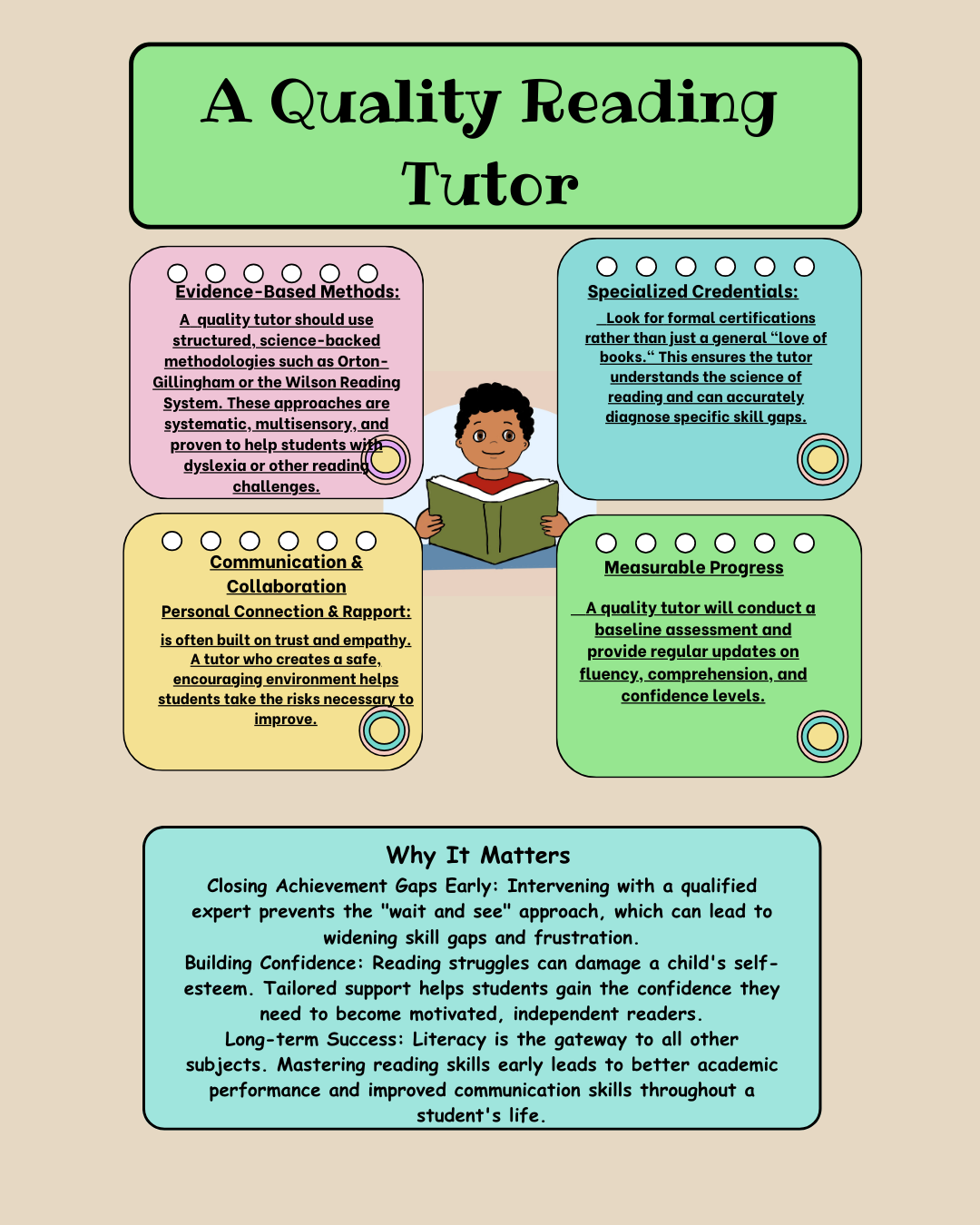
Evidence-Based Methods: A quality tutor should use structured, science-backed methodologies such as Orton-Gillingham or the Wilson Reading System. These approaches are systematic, multisensory, and proven to help students with dyslexia or other reading challenges.
Specialized Credentials: Look for formal certifications, rather than a general "love of books." This ensures the tutor understands the science of reading and can accurately diagnose specific skill gaps.
Personal Connection & Rapport: Success is often built on trust and empathy. A tutor who creates a safe, encouraging environment helps students take the risks necessary to improve.
Communication & Collaboration: The best tutors don't work in a vacuum; they collaborate with parents and teachers to ensure the student’s learning plan is consistent across school and home.
Measurable Progress: A quality tutor will conduct a baseline assessment and provide regular updates on fluency, comprehension, and confidence levels.
Why It Matters
Closing Achievement Gaps Early: Engaging a qualified expert prevents a "wait and see" approach, which can widen skill gaps and lead to frustration.
Building Confidence: Reading struggles can damage a child's self-esteem. Tailored support helps students gain the confidence they need to become motivated, independent readers.
Long-term Success: Literacy is the gateway to all other subjects. Mastering reading skills early leads to better academic performance and improved communication skills throughout a student's life.
Methodology and Expertise
What specific reading methodologies do you use? A quality tutor should be able to explain their use of evidence-based, structured programs like Orton-Gillingham or the Wilson Reading System.
What specialized certifications do you hold? Ask for formal credentials, such as CALT or CALP, to confirm they have the training to diagnose and address specific skill gaps.
Assessment and Progress Tracking
What does your baseline assessment process look like? A professional tutor will conduct a formal baseline assessment before starting.
How and how often will you share progress updates with me? Consistent reporting on fluency, comprehension, and phonics is essential for measuring growth.
How do you set short-term and long-term goals for students? This ensures the tutoring remains focused on closing achievement gaps.
Rapport and Collaboration
How do you handle a student who is frustrated or lacks confidence? Look for an answer that emphasizes trust, empathy, and the creation of a safe learning environment.
Are you open to collaborating with my child’s classroom teacher? Effective tutors collaborate with school staff to ensure consistency in students' learning plans.
What is your approach to building a connection with a new student? This is critical for helping students gain the confidence they need to become motivated readers.
Reading Tutor Vetting Checklist
Methodology and Expertise
[ ] Uses evidence-based, structured programs (e.g., Orton-Gillingham or the Wilson Reading System).
[ ] Holds specialized certifications
[ ] Stays current with the latest Science of Reading research.
Assessment and Progress Tracking
[ ] Conducts a formal baseline assessment before beginning instruction.
[ ] Provides consistent, regular updates on fluency, comprehension, and phonics.
[ ] Sets clear short-term and long-term goals to close achievement gaps.
Rapport and Collaboration
[ ] Demonstrates an approach rooted in trust, empathy, and the creation of a safe learning environment.
[ ] Is willing to collaborate with classroom teachers to ensure a consistent learning plan.
[ ] Focuses on building a strong connection to motivate the student and build confidence.